
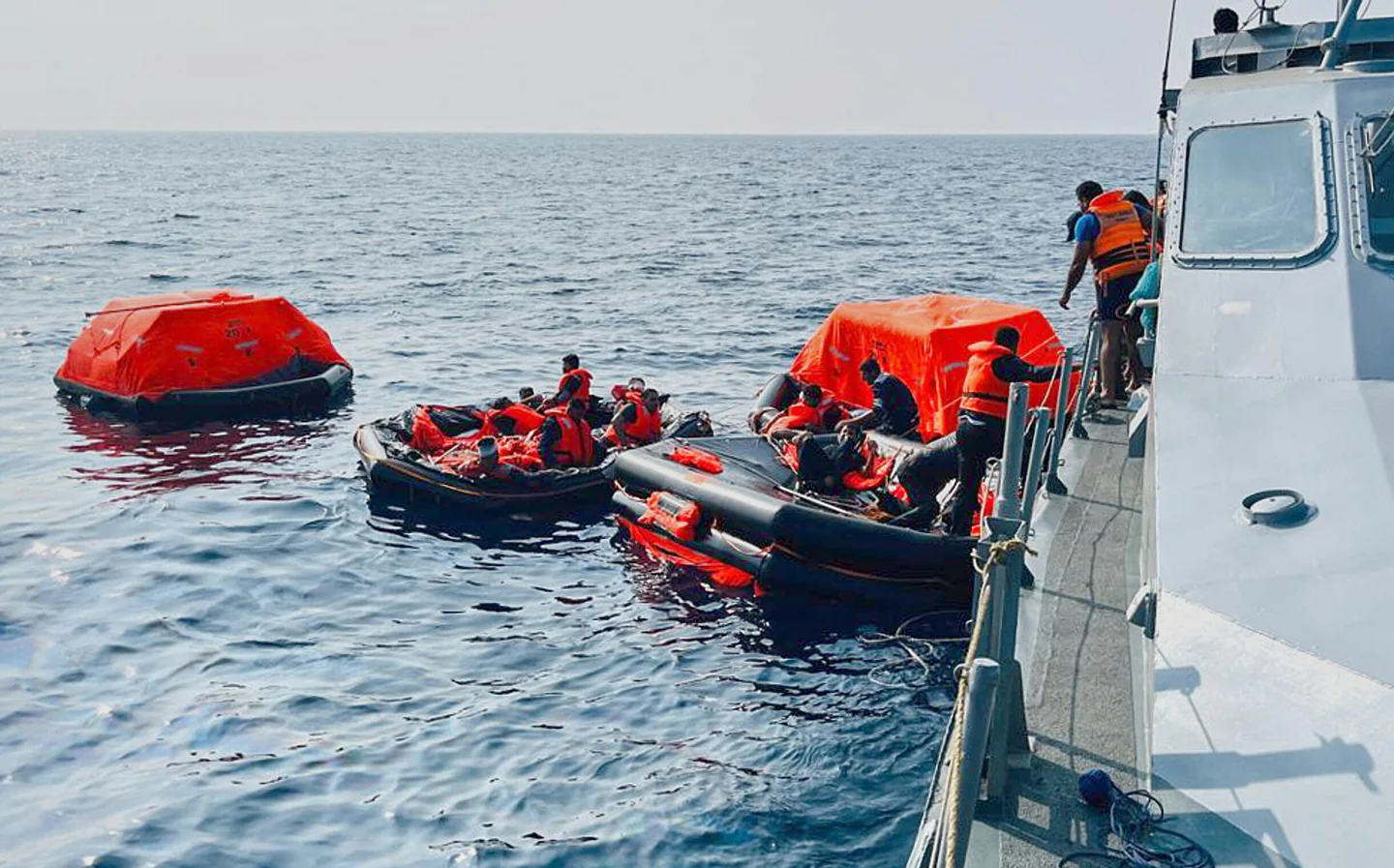
 The U.S. torpedoing of an Iranian frigate off Sri Lanka this week may have violated the Geneva Conventions by failing to help rescue sailors from the stricken warship, an act that could potentially endanger American service members in this and future wars.
The 312-foot Dena and its 130-member crew, many of them musicians in the Iranian navy band, had just finished participating in an Indian government naval exercise and cultural exchange that the U.S. Navy had also participated in and were on the way home on Wednesday. After clearing Sri Lanka, it was struck by a torpedo fired from a U.S. Navy submarine about 20 miles from the island’s southern tip. The weapon appears to have ruptured the hull from beneath, and the warship quickly sank. The submarine did not attempt to rescue Iranian sailors in the water.
White House press secretary Karoline Leavitt bragged about how the attack featured the first American use of a torpedo to sink a ship since World War II. Defense Secretary Pete Hegseth, narrating a video clip of the attack, used the same gloating tone. “An American submarine sunk an Iranian warship that thought it was safe in international waters. Instead, it was sunk by a torpedo. Quiet death,” he intoned.