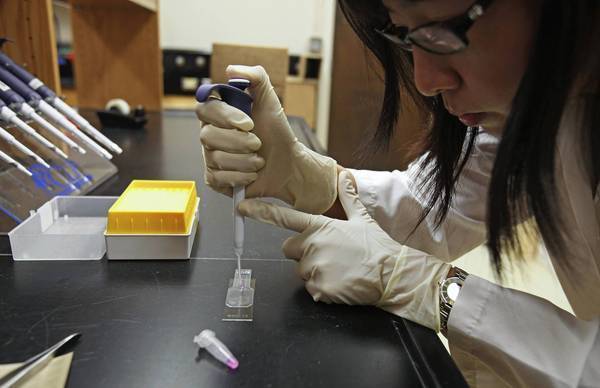
 Scientists who helped pioneer BioWatch, the government's system for detecting a biological attack on the U.S., knew from the start that it was prone to false alarms, records show.
Between 2003, when the nationwide network of air samplers was first deployed, and 2006, officials at the federally funded Lawrence Livermore National Laboratory filed five patent applications aimed at improving BioWatch's reliability.
"The existing methods for detecting" a release of disease-causing organisms into the environment were "inadequate," according to a patent application filed on behalf of Livermore scientists in December 2006.
The application cited a "higher than acceptable rate of false positive ... results," adding: "False positive results lead to confusion regarding whether [a pathogen] is actually present and whether protective measures should immediately be implemented."
 Pine trees near Lake Tahoe are being poisoned in what authorities believe are a series of...
 Jackie – the beloved bald eagle at California’s Big Bear Lake whose livestream was followed by...
 A piece of a SpaceX Falcon 9 rocket is expected to slam into the moon on...