
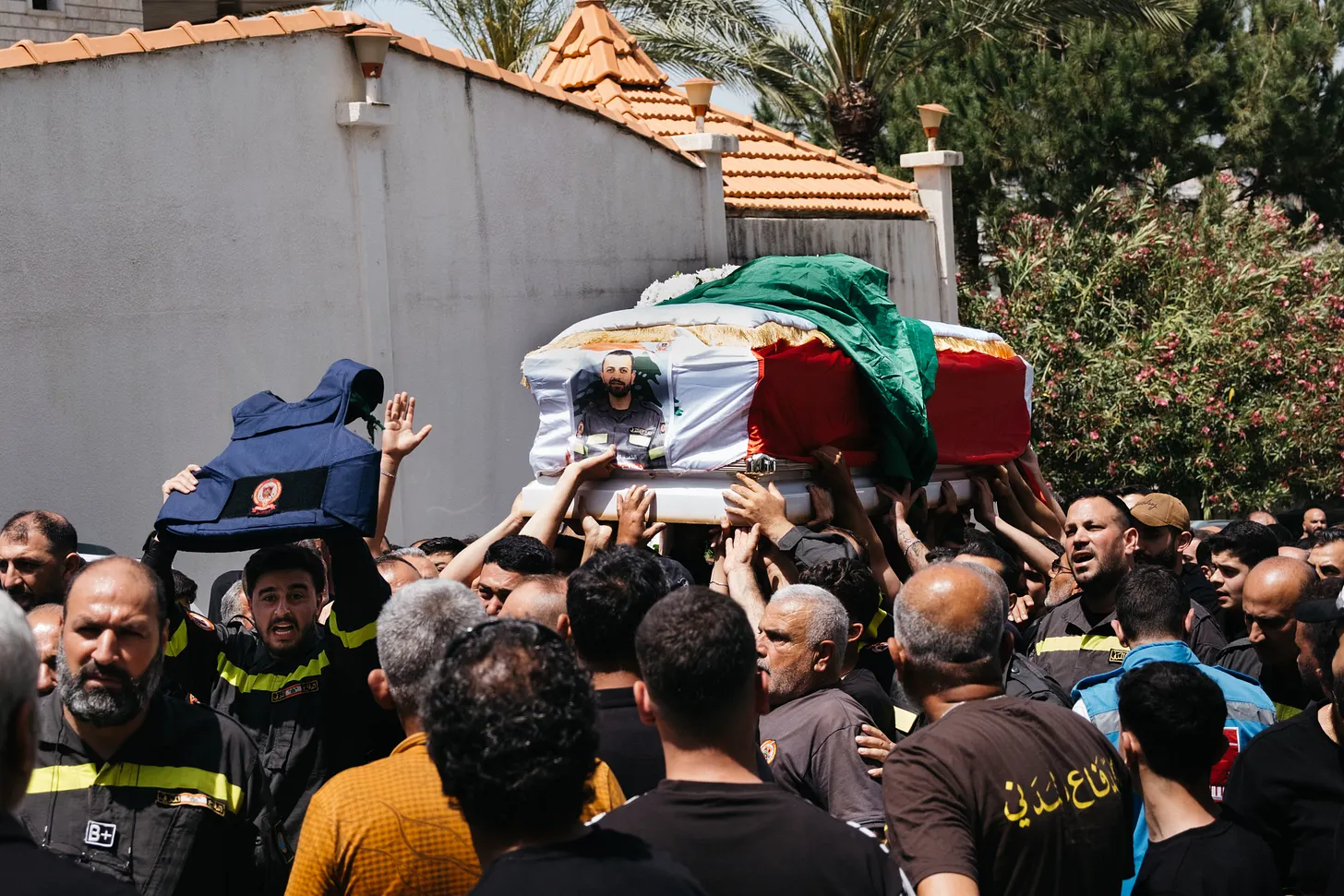
 An excavator stood on top of what used to be a house in Deir Qanoun Al-Nahr, in southern Lebanon, moving broken concrete from one side of the crater to the other. Rescue workers in fluorescent vests pried away the rubble with their hands. Ahmed Hariri, a paramedic and photojournalist was among them.
Dust rose from the ruins as the men dug hurriedly for any sign of life—or death. “There’s something here,” one of them shouted. He pulled a bloodstained piece of concrete from the wreckage. The others rushed toward him and began to dig faster. Somewhere beneath the flattened family home lay the remains of three people still missing on Wednesday after an Israeli airstrike a day earlier killed 14 people, including four children, in one of the single deadliest attacks in Lebanon in weeks. Ten of the dead belonged to three generations of the same family. A Syrian family of four was killed alongside them.
Barely two days later, Ahmed Hariri was killed along with another paramedic in another Israeli airstrike on Deir Qanoun Al-Nahr on Friday that left a total of six people dead. That airstrike had followed the killing overnight on Thursday of four paramedics and wounding of five more in an Israeli attack on Hannawiyah that destroyed both the town’s main Health Authority center and a newly established ambulance station in Tyre.
Israel’s wanton killing of rescue workers and targeting of medical infrastructure in Lebanon has been one of this war’s most brazen features. For the past five weeks, the relentless Israeli aerial and ground assault has continued despite a nominal ceasefire being announced by President Donald Trump on April 16. Last week, Israel and Lebanon agreed to a 45-day extension of the “ceasefire” after holding their third round of direct talks in Washington, of which Hezbollah is not a part. The declaration of a ceasefire has not stopped the Israeli military from continuing its bombardment of Lebanon, mostly in the south and the eastern Bekka Valley. Since March 2, Israel has killed more than 3,100 people across the country and wounded more than 9,400, according to Lebanon’s Ministry of Health, over 900 of them since the so-called ceasefire went into effect.