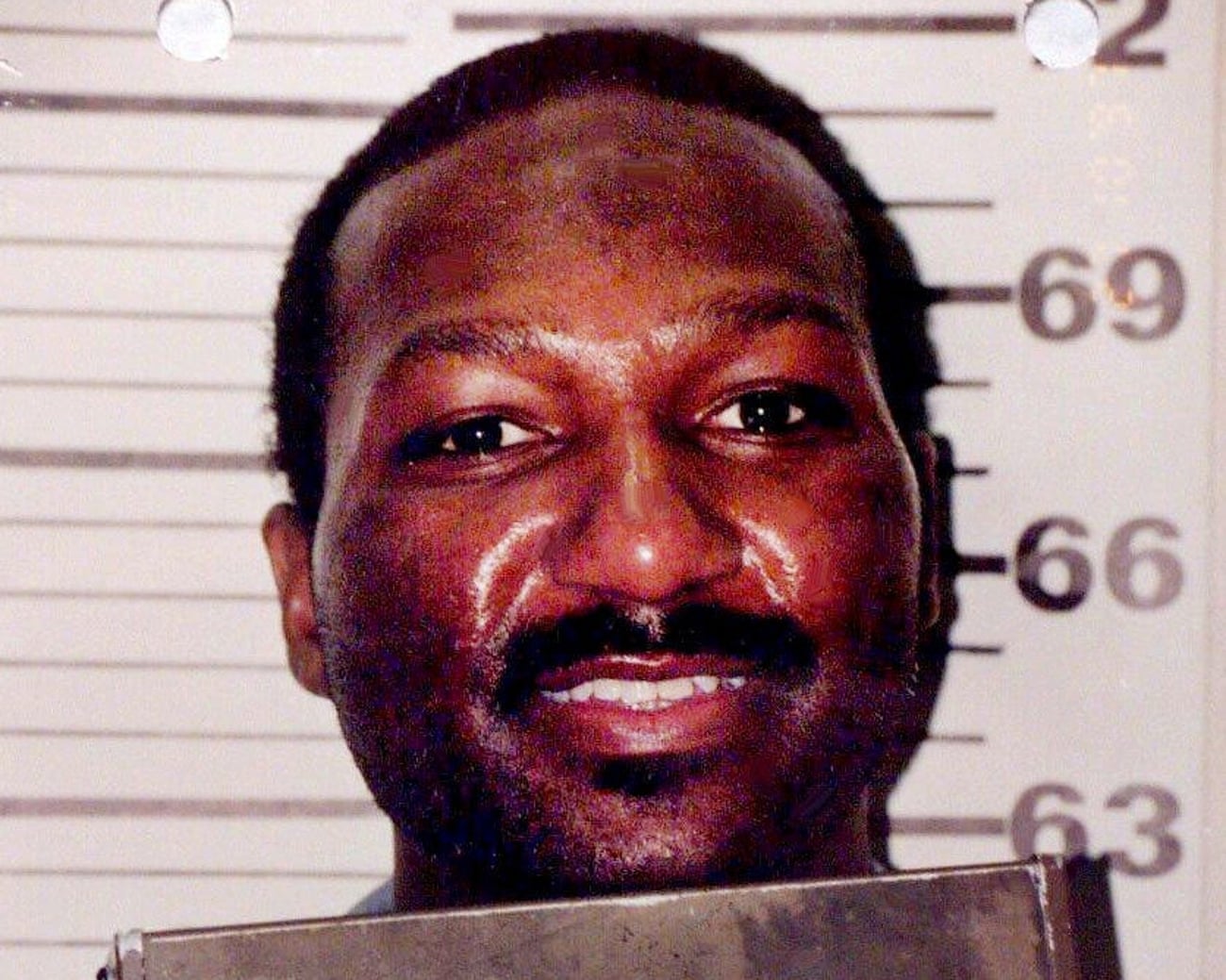
 For attorney Kelley Henry, the visible blood was the first indication that the execution of her client was going wrong.
At 10.15am on Tuesday inside the Riverbend maximum security prison in Nashville, the longtime Tennessee death row lawyer watched as staff attempted to place an IV into the right arm of Byron Black. Black was locked on to a gurney with crisscrossing black straps over his chest, stomach and legs, and Henry saw blood ooze from the injection site.
For attorney Kelley Henry, the visible blood was the first indication that the execution of her client was going wrong.
At 10.15am on Tuesday inside the Riverbend maximum security prison in Nashville, the longtime Tennessee death row lawyer watched as staff attempted to place an IV into the right arm of Byron Black. Black was locked on to a gurney with crisscrossing black straps over his chest, stomach and legs, and Henry saw blood ooze from the injection site.
The staff managed to insert the IV and cleaned the wound, but then struggled for roughly 10 minutes before finding a vein in Black’s second arm, Henry recalled.
The IVs would be used to inject a lethal quantity of pentobarbital, a sedative, into Black, a 69-year-old wheelchair user with lifelong intellectual disabilities, dementia, brain damage, kidney failure, severe heart failure and prostate cancer. The drug was meant to render him unconscious as it stopped his breathing and killed him.
 A news helicopter crashed in a Los Angeles neighborhood on Tuesday and burst into flames, killing...
 New York City officials have selected Brooklyn-based company it’s electric to expand the city's curbside electric...
 Police in Jackson, Mississippi, have arrested a man in the death of Tasia Fortune, a 29-year-old...