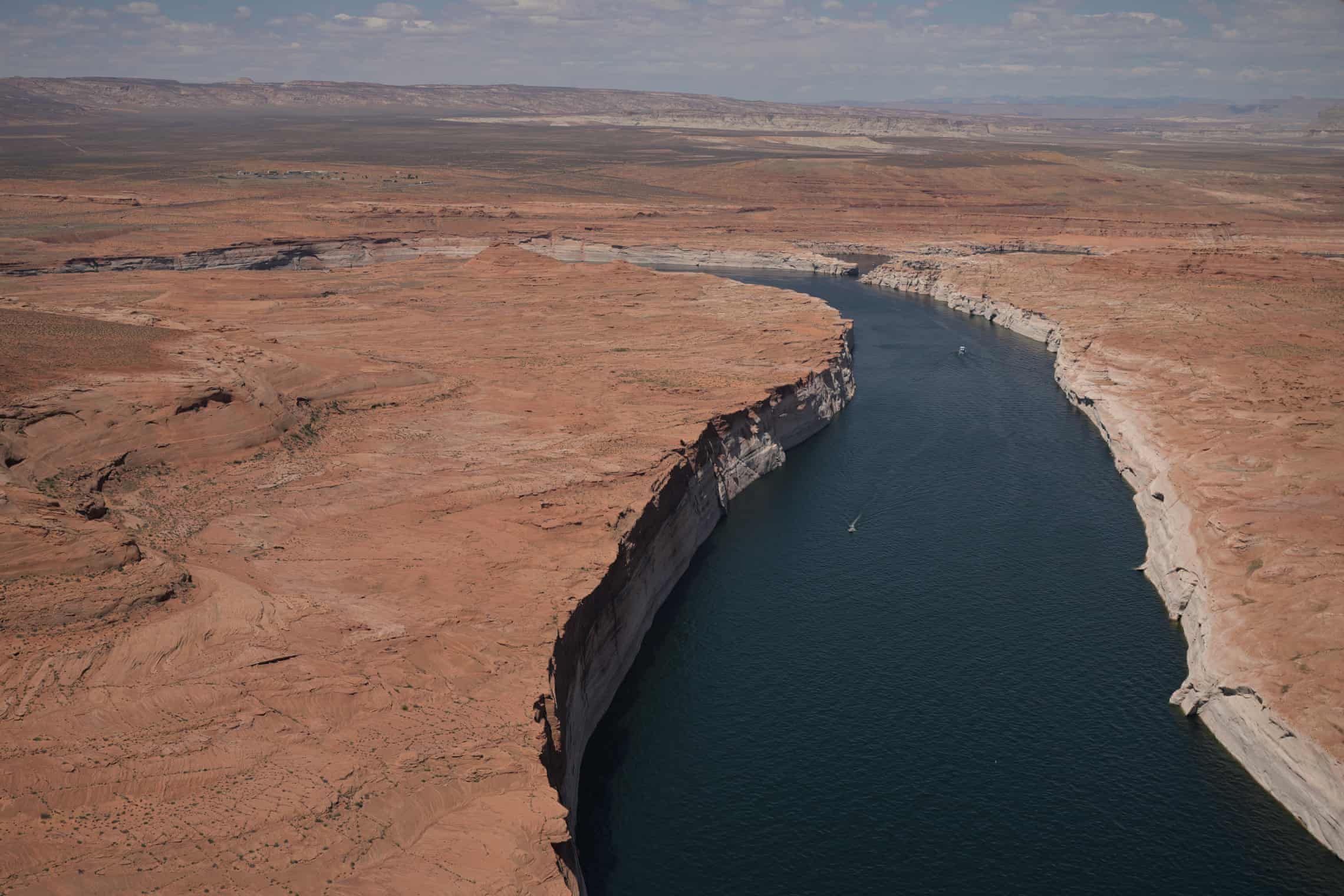
 Lake Powell, the US’s second-largest reservoir, threatens to plunge to unprecedentedly low levels this year after a historically bleak snowpack failed to raise its water level, scientists and water experts have said, adding renewed urgency to stalled talks over how to conserve a water source depended on by tens of millions of people in the US south-west.
The 185-mile Colorado River reservoir currently stands at about 22% of its capacity, or roughly 5.6m acre-feet. Lake Powell fell below that level for a few months three years ago. But those 2023 levels were recorded in the winter, when the reservoir, which straddles the Utah-Arizona border, hits its lowest ebb. Spring runoff carried the level back up to 9.6m acre-feet by June, according to data from the US Bureau of Reclamation.
Not this year. After a winter of historically low snowpack in the mountains and a heatwave that broke records across the south-west in March, water levels at Lake Powell barely rose this spring at all. Even after supplemental releases from Flaming Gorge Reservoir upstream, it ended the month of June below the annual low it hit the month before, and could keep dropping. Except for those few months in 2023, Lake Powell’s water level has not been this low since June of 1965 – two years after US authorities first started filling it.
 New York City’s top watchdog agency has hired a team of lawyers to investigate exactly what...
 Earth cooked to its hottest month on record in August, blowing far past a key climate...