A well-worn expression among oceanographers and others who explore the watery depths of planet Earth is that we humans “know the surface of Mars better than our ocean floors.” Covering more than 70 percent of the world’s surface, oceans are notoriously difficult to study—not to mention pretty inhospitable to any creatures sans gills.
Case in point: Scientists from Tokyo University and Hokkaido University in Japan stumbled across some mysterious jet-black eggs while piloting a remotely operated vehicle (ROV) in the Pacific Ocean at a depth of roughly 6,200 meters (or 3.85 miles).
This is the maximum depth of the abyssopelagic zone, which is the deepest layer of most of the ocean—hadopelagic zones are technically deeper, but only fill deep trenches. Any biological discovery in this zone is immensely important, as the life cycles of creatures living there are largely unknown.
Unsure what these eggs were, University of Tokyo marine researcher Yasunori Kano—who was at the controls of the ROV at the time—opted to retrieve a sample of the eggs for further analysis topside.
 The last time I saw Laura Grego was in a tent in a baking field on...
 A piece of a SpaceX Falcon 9 rocket is expected to slam into the moon on...
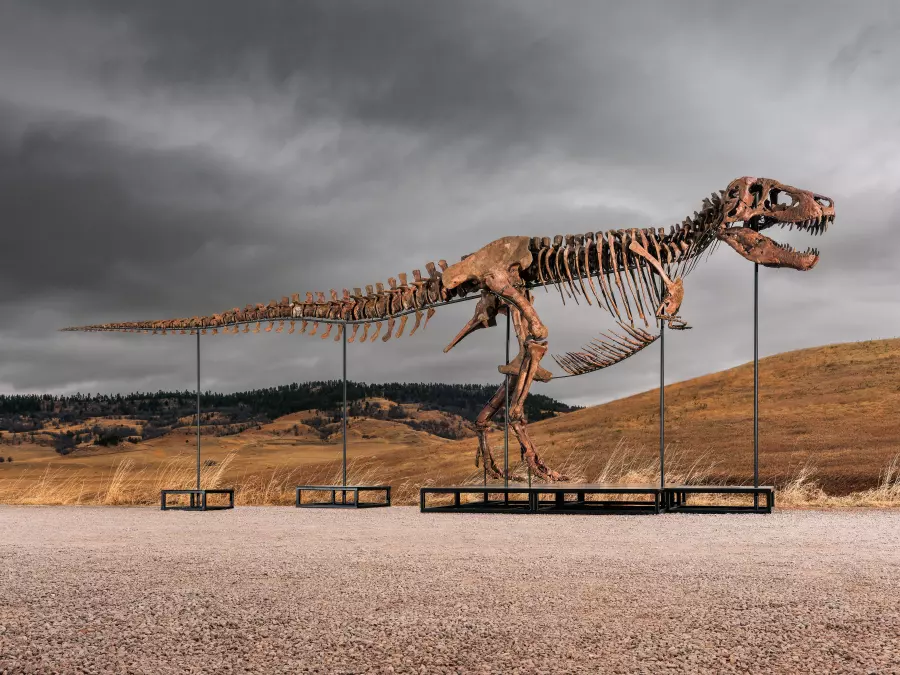 An imposing, 38-foot long Tyrannosaurus rex fossil sold for a record $50.1 million at auction on...