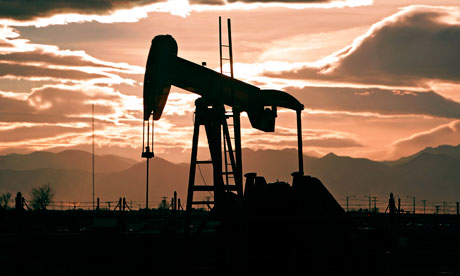
 Residents of Gardendale, a suburb near the hub of the west Texas oil industry, face having up to 300 wells in their backyards.
The corner of Goldenrod and Western streets, with its grid of modest homes, could be almost any suburb that went up in a hurry – except of course for the giant screeching oil rig tearing up the earth and making the pavement shudder underfoot.
Fracking, the technology that opened up America's vast deposits of unconventional oil and gas, has moved beyond remote locations and landed at the front door, with oil operations now planned or under way in suburbs, mid-sized towns and large metropolitan areas.
Some cities have moved to limit fracking or ban it outright – even in the heart of oil and gas country. Tulsa, Oklahoma, which once billed itself as the oil capital of the world, banned fracking inside city limits. The authorities in Dallas last week blocked what would have been the first natural gas well in town. The town of Longmont, just outside Denver, meanwhile, is fighting off attempts by industry groups to overturn a fracking ban.
But Gardendale, a suburb of 1,500 people near the hub of the west Texas oil industry, exists in a legal and political environment in which there are seemingly few restrictions on fracking, even inside city limits. For residents here, fracking is part of daily life.
 Cuba experienced a shake on the afternoon of Monday, June 8, as a preliminary 6.1 magnitude...
 Modern roads in the United States will last for decades. And yet the damage they cause...
 An enormous marine heatwave off the US west coast is ringing alarm bells among ocean and...