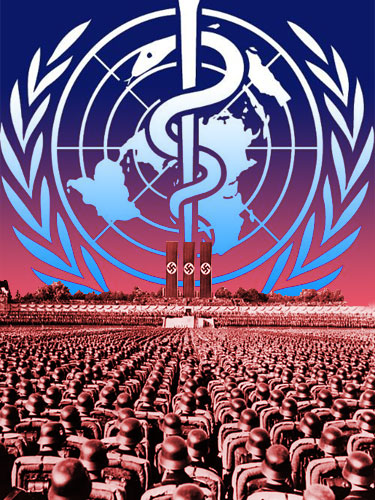
 A study published in Human and Experimental Toxicology in May of 2011 concluded that “nations that require more vaccine doses tend to have higher infant mortality rates.
After an in-depth study into the effects of vaccine-coverage in relation to mortality rates among infants, the authors Neil Z. Miller and Gary S. Goldman came to this disturbing conclusion and advised that “a closer inspection of correlations between vaccine doses, biochemical or synergistic toxicity, and IMRs, is essential.”- but naively concluded that “All nations—rich and poor, advanced and developing—have an obligation to determine whether their immunization schedules are achieving their desired goals.”
If you eradicate the human, you eradicate the disease- problem solved:
“Infectious diseases, however, continue to be most significant in developing countries, which experience relatively rapid population growth. The effect of this influx of children on the persistence and dynamics of childhood diseases, as well as on the critical vaccination coverage, is reasonably well-established (McLean and Anderson, 1988a; Broutin et al., 2005). But it is now warranted to turn this framework on its head: can fertility reduction be an integral element of a disease eradication campaign?”
 A provision in last year’s One Big Beautiful Bill Act blocked Planned Parenthood’s health centers from...
 The U.S. Department of Agriculture confirmed the presence of New World screwworm in a 3-week-old calf...
 A smart drug that stops cancer cells “hiding” from treatment can shrink tumours by at least...