Environmental Glance
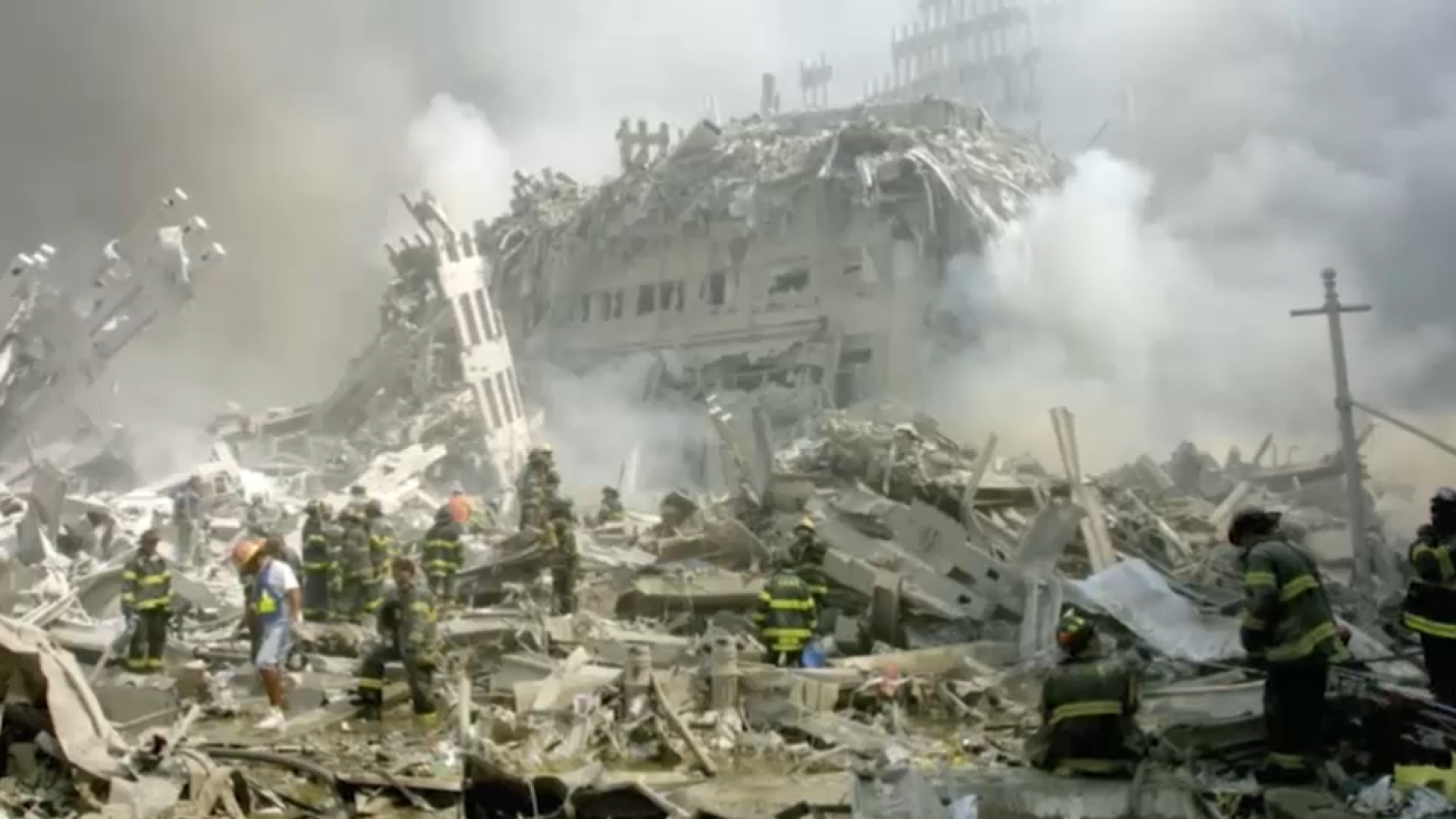 New York City’s top watchdog agency has hired a team of lawyers to investigate exactly what city officials knew about health hazards from toxic dust created by the destruction of the World Trade Center on 9/11.
In a notice issued on Friday, the Department of Investigation said it selected a firm to “ascertain the knowledge possessed by mayoral administrations on environmental toxins produced by the Sept. 11, 2001 terrorist attacks.”
The investigation is mandated by a City Council resolution passed in July 2025. The department’s plan to hire the outside counsel to help with the probe comes just over a week after Mayor Zohran Mamdani released some 170,000 documents related to the air quality around Ground Zero following the attacks that revealed officials had early concerns over asbestos — and legal liability — even as government leaders publicly told New Yorkers the air was safe to breathe.
The investigation department is finalizing a two-year, $3.8 million contract to the law firm Epstein Becker and Green PC to help with what the notice described as a “time-sensitive” probe. The law firm did not respond to a request for comment.
NYC's top watchdog launches probe into what mayors knew about post-9/11 air
Scientists say August was Earth's hottest month they've measured
 Earth cooked to its hottest month on record in August, blowing far past a key climate threshold, due to the dangerous double whammy of human-caused climate change and a supersized El Nino, according to the European climate service Copernicus.
August's sizzle also helped push the globe and the United States to swelter through the hottest Northern Hemisphere summer scientists have measured.
"It is now time to stop acting surprised that our warming planet keeps getting warmer. This is occurring exactly as forecast by scientists literally decades ago," Texas A&M University climate scientist Andrew Dessler said in an email. "The interesting question is not whether we will keep breaking heat records (we will), but whether we're going to do anything about it or just stand there while the climate train runs us over."
Globally, August was 1.65 degrees Celsius (nearly 3 degrees Fahrenheit) above pre-industrial levels, far exceeding the longer term 1.5 degrees Celsius (2.7 degrees Fahrenheit) threshold set by the 2015 Paris climate agreement. The eight hottest months on record have all been from July 2023 on, according to Copernicus data.
Hurricane Lowell approaches Hawaii as conditions worsen across islands
Hurricane Lowell has put the western end of the Hawaiian Islands under a hurricane warning on Labor Day as it rapidly approaches with high winds, heavy rain, dangerous surf, and possible tornadoes.
"Flash flooding, damaging waves, and high winds are expected from Lowell," the National Hurricane Center warned in a late afternoon update on Sept. 7. The National Hurricane Center noted in its 8 p.m. ET advisory that conditions were deteriorating for the islands of Niihau, Kauai, and Oahu.
Lowell's center is not forecast to make a direct landfall on the main Hawaiian Islands as it passes on Sept. 7 and 8. Still, the threats have increased for the islands of Niihau and Kauai because the storm's forecast track has shifted steadily eastward, the National Hurricane Center said.
The hurricane warning – meaning hurricane conditions are expected within the watch area – is in effect for Kauai County, including the islands of Niihau and Kauai. A tropical storm warning – meaning tropical storm conditions are expected within the watch area – is in effect for Oahu, the most populated Hawaiian Island.
Court halts Trump effort to help Congress overturn California clean car rules
A federal judge late Wednesday temporarily blocked a Trump administration effort to overturn California’s clean car rules through Congress.
Judge Beryl Howell, an appointee of former President Obama, blocked an Environmental Protection Agency (EPA) move that would have allowed Congress and President Trump to overturn California rules related to vehicle and lawn equipment emissions.
In years past, the EPA allowed these regulations to move forward by granting waivers that exempted them from the Clean Air Act’s preemption of state laws that are stricter than federal standards.
In June, the agency classified these waivers as “rules,“ an effort to let Congress overturn them using the Congressional Review Act (CRA), which allows lawmaker to nix recently passed rules with simple majority votes and presidential approval.
“The central problem for EPA is that the waivers themselves explicitly state that they are not rules, while the CRA limits invocation of this statute only to agency rules of general applicability, which EPA, in its own words, has emphatically stated Clean Air Act waiver orders are not,” Howell wrote in her ruling.
At least 20 people missing after Grand Canyon flash flood near Bright Angel Canyon, Phantom Ranch
 Severe flash flooding in the Grand Canyon on Saturday caused significant damage to infrastructure, forced the evacuation of over 60 people and has left more than a dozen missing.
At least 62 people have been evacuated from Phantom Ranch and the lower North Kaibab rail to the South Rim by the Arizona Department of Public Safety and National Parks Service, according to a release by NPS. Additional evacuations were scheduled at the Cottonwood Campground and Phantom Ranch for Sunday.
At least 20 people are missing or unaccounted for, according to the NPS. Anyone who knows hikers or campers who were in the area at the time should contact the National Park Service Investigative Services Branch.
Flooding near Bright Angel Canyon and Phantom Ranch has destroyed several structures and damaged other infrastructure and utilities.
The Black Bridge and Silver Bridge crossing the Colorado River and nearly all footbridges crossing Bright Angel Creek were destroyed by the flooding, and several trails, including the North Kaibab Trail, are closed.
Tom Martin, a Grand Canyon River Runner, said torrential rain fell on the Dragon Bravo fire scar and debris poured down the North Rim of the canyon, resulting in large debris flows.
US says around 85 Americans remain missing after Nepal flood
 About 85 Americans remain missing after a devastating flood swept through a remote region of the Nepali Himalayas, the State Department said on Sunday.
The US figure is just a small fraction of the more than 2,500 people that remain missing after the disaster.
Some 781 people have been confirmed dead by authorities after the wall of water, mud and debris tore through the region and overwhelmed entire villages early Wednesday.
State Department spokesman Tommy Pigott told ABC talk show “This Week” that nine Americans have been evacuated and that he was unaware of any US nationals dying in the disaster.
“The remoteness of this location makes getting reliable information difficult. But our dedication remains, our commitment remains,” Pigott said.
Fire in California’s Big Sur region doubles in size overnight, forcing evacuations
 A fire in California’s Big Sur region doubled in size overnight, forcing the evacuation of nearby residents, in a coastal region where firefighters have battled another blaze for weeks.
The Plaskett fire, which sparked on Tuesday, had swept through more than 5,900 acres (2,400 hectares) in Monterey county as of Friday, and remained un-contained, according to Cal Fire. Its cause is under investigation.
Fire authorities have deployed helicopters and air tankers to suppress the flames with targeted water drops, but the remote area’s steep terrain and scarce roads have hindered ground crews’ ability to access the fire.
Meanwhile, to the north, the Timber fire continues to burn through more than 24,000 acres (9,700 acres), as authorities have it under 21% containment. The blaze broke past certain containment lines. Smoke from the fire and cloud cover prevented officials from mapping the fire’s expansion overnight.
More Articles...
Page 1 of 202