Military Glance
 The Pentagon’s public database left out two deaths of U.S. service members deployed in the Middle East during the war against Iran, who took part in missions unrelated to the conflict in the Middle East.\
Maj. Sorffly Davius, who served in the 42nd Infantry Division at Camp Buehring, Kuwait, died of “undetermined causes” on March 6 this year. The release announcing his death said he deployed to Kuwait in the summer of 2025 in support of Operation Spartan Shield.
Sgt. Devin Seibel, who was assigned to the Air Ambulance Company, 2nd Battalion, 4th Combat Aviation Brigade, Fort Carson, Colo., died on May 31 in Erbil Airbase, Iraq, during a “training-related incident,” the Pentagon said in a June press release. Seibel, whose death is under investigation, deployed in support of Operation Inherent Resolve.
Their deaths are not included in the Pentagon’s Defense Casualty Analysis System (DCAS), which came under fire earlier this year for briefly excluding names of several U.S. service members who were killed because of Iranian military attacks.
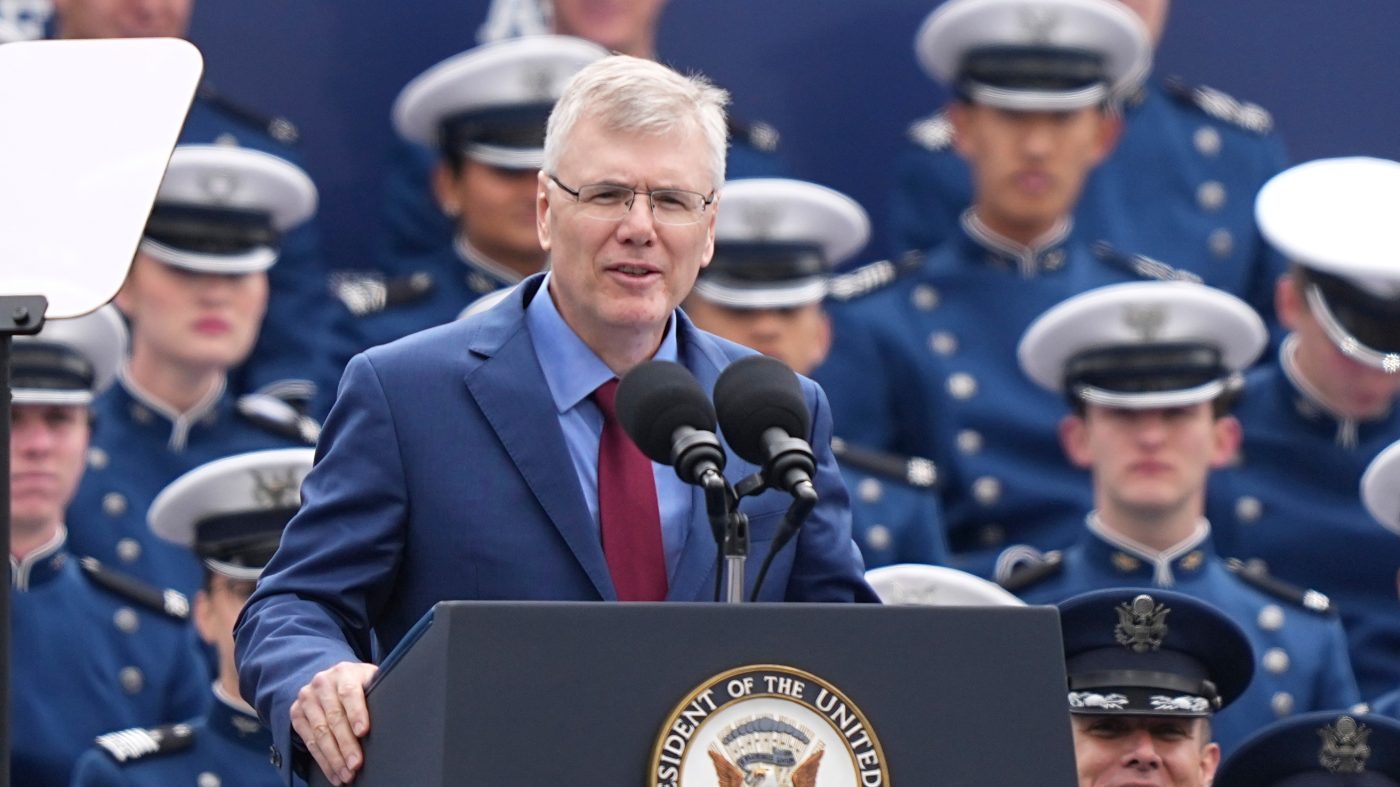 Meink did not provide many details about the weapon or when it was launched, but he stated that it will “make sure that when we’re threatened, we can take care of that.”
 In a different Washington, under a different president, a return to the well-worn playbook of all-out sanctions to counter Iran might have been the signal for a publicity-hungry US secretary of defense to adopt a lower profile.
 Pete Hegseth on Monday appeared to mock a woman’s weight in a photo from the Vernon Cadet Training Centre for youth in British Columbia, Canada.