Human Rights Glance
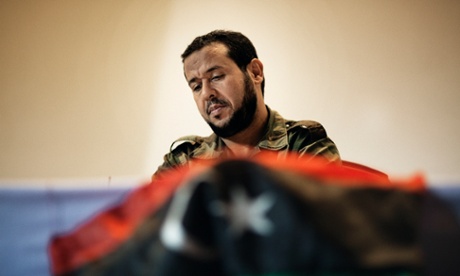 Abou Elkassim Britel can’t sleep, or he sleeps too much; it varies. He backs out of commitments. The Islamic website he wants to publish from his Italian home remains unfinished.
“I would add,” he said through translation, “that I cannot think of the future.”
The doctors tell Britel that he has post-traumatic stress disorder, after a decade-long ordeal of imprisonment without charge or transfer and abuse. It began in 2002, when the United States packed him onto a contractor’s Gulfstream V in Pakistan and flew him to Morocco.
US rendition survivors urge Obama to declassify torture report
Seattle protesters aim to block Israeli cargo ship over Gaza siege
 Palestinian rights activists in the Seattle area picketed the Port of Tacoma on Monday in an attempt to block a commercial Israeli cargo ship from unloading its merchandise.
The action follows a similar protest last week that managed to prevent the delivery of goods for days from a vessel seeking to dock in Oakland, California.
Block the Boat organizers said the ship, which is owned by Israel's Zim Shipping Services Ltd., one of the world’s largest container shipping companies, was schedule to arrive in the Port of Tacoma on Monday afternoon.
Saudi Arabia beheaded 19 in seven days
 Saudi Arabia has executed at least 19 people since August 4, 2014. Local news reports indicate that eight of those executed were convicted of nonviolent offenses, seven for drug smuggling and one for sorcery.
Family members of another man, Hajras bin Saleh al-Qurey, told Human Rights Watch on August 17 that they fear his execution is imminent. The Public Court of Najran, in southern Saudi Arabia, sentenced al-Qurey to death by beheading on January 16, 2013 for allegedly smuggling drugs and attacking a police officer during his arrest.
U.S. Avoided Threat to Act on Israel’s Civilian Targeting
United Nations officials and human rights organisations have characterised Israeli attacks on civilian targets during the IDF war on Gaza as violations of the laws of war.
During the war, Israeli bombardment leveled whole urban neighbourhoods, leaving more than 10,000 houses destroyed and 30,000 damaged and killing 1,300 civilians, according to U.N. data. Israeli forces also struck six schools providing shelter to refugees under U.N. protection, killing at least 47 refugees and wounding more than 340.
But the Barack Obama administration’s public posture during the war signaled to Israel that it would not be held accountable for such violations.
Obama's Pentagon Covered Up War Crimes in Afghanistan, Says Amnesty International
 The human-rights group reports the U.S. military systematically ignored evidence of torture and unlawful killings in Afghanistan as recently as last year.
The U.S. military has systematically covered up or disregarded “abundant and compelling evidence” of war crimes, torture, and unlawful killings in Afghanistan as recently as last year, according to a report by Amnesty International published today in Kabul.
The human rights organization alleges that the U.S. military has routinely failed to properly investigate reports of criminal behavior and, in some instances, tampered with evidence to conceal wrongdoing. On the rare occasions when servicemen are held to account, the report found that the compromised military justice system seldom secured justice for the victims of enforced disappearances, killings, and abuse that included torture.
These Undocumented Teens Outsmarted MIT—and Still Can't Get Real Jobs in America
 The film tells the story of four undocumented Mexican teenagers who are members of a robotics club at Carl Hayden High School in the barrio of Phoenix; their parents speak no English, and their own horizons are limited.
With the help of dedicated teachers, they build an underwater robot and enter a grueling collegiate competition held at the University of California, Santa Barbara in 2004. The boys figure they might learn something from the older college-age engineers showing off their robots.
Gaza raids further traumatize children suffering from PTSD
 The traumatization of young people in Gaza looks set to become a lingering wound of the latest Israeli airstrikes, adding to the burden of mental-health experts whose work to heal child PTSD sufferers in the territory has, yet again, been set back by renewed shelling.
The latest wave of bombardments has made it impossible for child psychologists to finish the delicate task of rebuilding the mental health of kids suffering Post Traumatic Stress Disorder (PTSD) from previous waves of conflict, according to a children’s rights group on the ground.
Meanwhile, parents report renewed signs of anxiety and stress among the young. Umm Fadi’s daughters have begun wetting their beds at night. It is a common phenomenon during the past offensives.
More Articles...
Page 39 of 205