Human Rights Glance
A still-classified report on the CIA's interrogation program established in the wake of 9/11 sparked a furious row last week between the agency and Senate Intelligence Committee chairwoman Dianne Feinstein. Al Jazeera has learned from sources familiar with its contents that the committee's report alleges that at least one high-value detainee was subjected to torture techniques that went beyond those authorized by George W. Bush's Justice Department.
Two Senate staffers and a U.S. official, who spoke on the condition of anonymity because the information they disclosed remains classified, told Al Jazeera that the committee's analysis of 6 million pages of classified records also found that some of the harsh measures authorized by the Department of Justice had been applied to at least one detainee before such legal authorization was received.
Revealed: Inside the Senate report on CIA interrogations
US terror 'watchlist' risks stigmatizing hundreds of thousands, says ACLU
 The U.S. government's “massive” watchlist database risks stigmatizing hundreds of thousands of people as known or suspected terrorists – including some its own citizens, a leading civil liberties group has warned.
Around 875,000 names are believed to be on the list, the American Civil Liberties Union (ACLU) said. Many are included "based on information that is often stale, poorly reviewed, or of questionable reliability," it added in a report published Friday. Moreover people are being put onto the watch list based on secret evidence and secret standards, with no meaningful process to challenge mistakes, the ACLU warned.
US criticised by UN for human rights failings on NSA, guns and drones
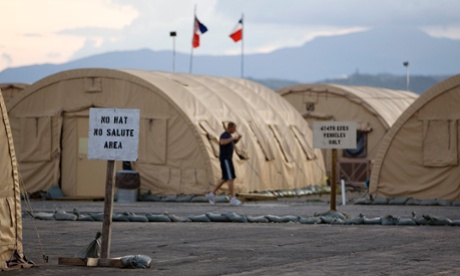 The US came under sharp criticism at the UN human rights committee in Geneva on Thursday for a long list of human rights abuses that included everything from detention without charge at Guantánamo, drone strikes and NSA surveillance, to the death penalty, rampant gun violence and endemic racial inequality.
At the start of a two-day grilling of the US delegation, the committee’s 18 experts made clear their deep concerns about the US record across a raft of human rights issues. Many related to faultlines as old as America itself, such as guns and race.
Senate Investigation of Bush-Era Torture Erupts Into Constitutional Crisis
 A gripping battle between the Central Intelligence Agency and the Senate Intelligence Committee broke into public view Tuesday morning, as Senator Dianne Feinstein openly accused the CIA of spying on congressional staffers as they investigated the agency’s illegal detention and interrogation programs under President George W. Bush.
Feinstein’s allegations raise grave questions about how the executive branch interprets constitutional separation of powers, along with raising serious concerns about the integrity of congressional oversight of US intelligence agencies. And lurking in the background is the country’s dirty history of torture following the September 11 terror attacks, which top officials—including those appointed by President Obama—seem determined to brush into the dustbin of history.
Congo Rebel Leader Found Guilty of Crimes Against Humanity
The International Criminal Court found Democratic Republic of Congo rebel leader Germain Katanga guilty of war crimes and crimes against humanity, Judge Bruno Cotte said.
Katanga, 35, stood accused of seven counts of war crimes and three counts of crimes against humanity for attacks against ethnic-Hema villagers in the town of Bogoro in Congo’s northeastern Ituri district in February 2003. He was cleared on counts of rape and sexual slavery, as well as using child soldiers, The Hague-based court said.
The court found Katanga guilty “as an accessory to the crimes committed” on Feb. 24, 2003, Cotte said. Katanga’s role in providing arms to the rebels was essential to the crimes committed in Bogoro, he said.
Probe sought of CIA conduct in Senate study of secret detention program
 The CIA Inspector General’s Office has asked the Justice Department to investigate allegations of malfeasance at the spy agency in connection with a yet-to-be released Senate Intelligence Committee report into the CIA’s secret detention and interrogation program, McClatchy has learned.
The criminal referral may be related to what several knowledgeable people said was CIA monitoring of computers used by Senate aides to prepare the study. The monitoring may have violated an agreement between the committee and the agency.
Uganda's president to sign anti-gay bill Monday
 Uganda's president is expected on Monday to sign into law a controversial anti-gay bill that has harsh penalties for homosexual offenses.
The Uganda Media Center invited journalists Monday to witness the signing ceremony at the president's official residence in Entebbe, about 40 kilometers (24.86 miles) from the capital, Kampala.
The bill is popular in Uganda, but international rights groups have condemned it as draconian in a country where homosexuality is already criminalized. U.S. President Barack Obama has urged Ugandan President Yoweri Museveni not to sign the bill, saying it would "complicate" the east African country's relationship with Washington.
More Articles...
Page 42 of 205