International Glance
 France and Canada have followed the United Kingdom in announcing a ban on goods from illegal Israeli settlements, British Foreign Secretary Ed Miliband told the House of Commons on Tuesday.
Miliband said that France and Canada would impose a ban on the trade of goods and some services from Israeli settlements, after the three nations joined a group of 11 countries to condemn the Israeli government's actions in the occupied West Bank.
Miliband said the UK would take action against specific companies and individuals who provide services such as construction, infrastructure, financing, or real estate for settlement expansion.
The UK will "act in concert with others in a broad international coalition," he said.
Miliband also told the Commons that the UK had recognised the ethnic cleansing of Palestinians in the occupied West Bank, declared the Israeli occupation of Palestinian territory illegal and announced both comprehensive sanctions on Israeli settlements and a ban on all arms licences and other exports that "materially contribute to the occupation."
France and Canada join UK in announcing sanctions on Israeli settlements
UK recognises 'ethnic cleansing' in West Bank, sanctions settlements and declares Israeli occupation illegal
 The British government has recognised the ethnic cleansing of Palestinians in the occupied West Bank, declared the Israeli occupation of Palestinian territory illegal and announced both comprehensive sanctions on Israeli settlements and a ban on all arms licences and other exports that "materially contribute to the occupation."
France and Canada will also ban trade in settlement goods today, marking a significant diplomatic victory for the British government.
Foreign Secretary Ed Miliband said in parliament on Tuesday afternoon that "the official view of the British government is that the occupation is unlawful because because of Israel's entrenchment of its control, its intention to extend permanent sovereignty and its expansionist agenda via illegal settlements."
This means the UK has accepted the 2024 advisory opinion of the International Court of Justice, which said the occupation is unlawful and placed a duty on states to oppose it.
Ukraine Extends Full Tuition Compensation for Veterans' Children
 Under a government program extended for another year, children of Ukrainian veterans will have their contract-based tuition fully covered by the state for the 2026-27 academic year.
Prime Minister Serhii Koretskyi announced the extension of the program on Tuesday, Sept. 8, noting that the compensation applies to students at institutions of professional pre-higher and higher education.
To apply, students The Diia app is a unified digital portal for public services that provides Ukrainian citizens with access to digital documents, such as payrolls, taxes, renewing driver’s licenses and applying for social assistance.
Iceland summons US ambassador after Trump post showing American flag covering island
Iceland’s government called in the U.S. ambassador on Monday after President Trump posted a map showing the Nordic nation blanketed by the American flag.
Trump, who has previously pushed to take over Greenland and Canada, posted an image to Truth Social of the American flag stretching across North America, Greenland, Iceland, Central America and the Caribbean, with the map labeled “United States of America.”Trump did not offer an explanation for the post.
Icelandic Foreign Minister Þorgerður Katrín Gunnarsdóttir summoned U.S. Ambassador to Iceland Billy Long over the image, according to Icelandic public broadcaster RUV.
The Foreign Ministry told the outlet that officials made clear to Long, a former Missouri lawmaker and IRS commissioner who became ambassador in May, that Trump’s post was “completely inappropriate.”
South Africa accuses Israel of violating ICJ's legally binding provisional measures
 South Africa has accused Israel of breaking legally binding orders issued by the International Court of Justice (ICJ) intended to protect Palestinians in Gaza, while calling on the international community "to take all necessary action to prevent and punish genocide".
In a statement issued by the Department of International Relations and Cooperation (DIRCO), Pretoria said that Israel has refused to comply with three separate provisional measure orders issued by the ICJ. This refusal "undermines their protective function and entails further destruction of the Palestinian group", the statement says.
"The Provisional Measures were not only ordered to protect the rights of the Palestinian people under the Genocide Convention, they also safeguard the administration of justice and the legitimacy of the ICJ itself, by ensuring that the rights the Court is called upon to vindicate are not destroyed before it renders its final decision."
The statement added: "The Court’s orders are binding on Israel, and the international community also has an obligation to protect the Palestinian people from genocide, including to take all necessary action to prevent and punish genocide."
Israel extends detention of 'tortured' Gaza flotilla activists
 Saif Abu Keshek, a Spanish-Swedish national of Palestinian origin, and Thiago Avila, a Brazilian national, were detained by Israeli authorities late on Wednesday and brought to Israel, while more than 100 other pro-Palestine activists aboard the Global Sumud flotilla were taken to the Greek island of Crete.
According to the Brazilian embassy, Avila said he had been subjected to torture, beatings and mistreatment in Israeli detention.
During a monitored visit inhttps://www.middleeasteye.net/news/israel-extends-detention-tortured-gaza-flotilla-activists which he was separated by glass and unable to communicate freely, embashttps://www.middleeasteye.net/news/israel-extends-detention-tortured-gaza-flotilla-activistssy officials observed visible marks on his face. He also reported significant pain, particularly in his shoulder.
Abu Keshek was "subjected to torture and severe abuse while detained aboard the military vessel prior to transfer", the Global Sumud flotilla said, citing eyewitness testimony.
Putin Orders Three-Day Halt to Kyiv Strikes Amid US Envoy Visit
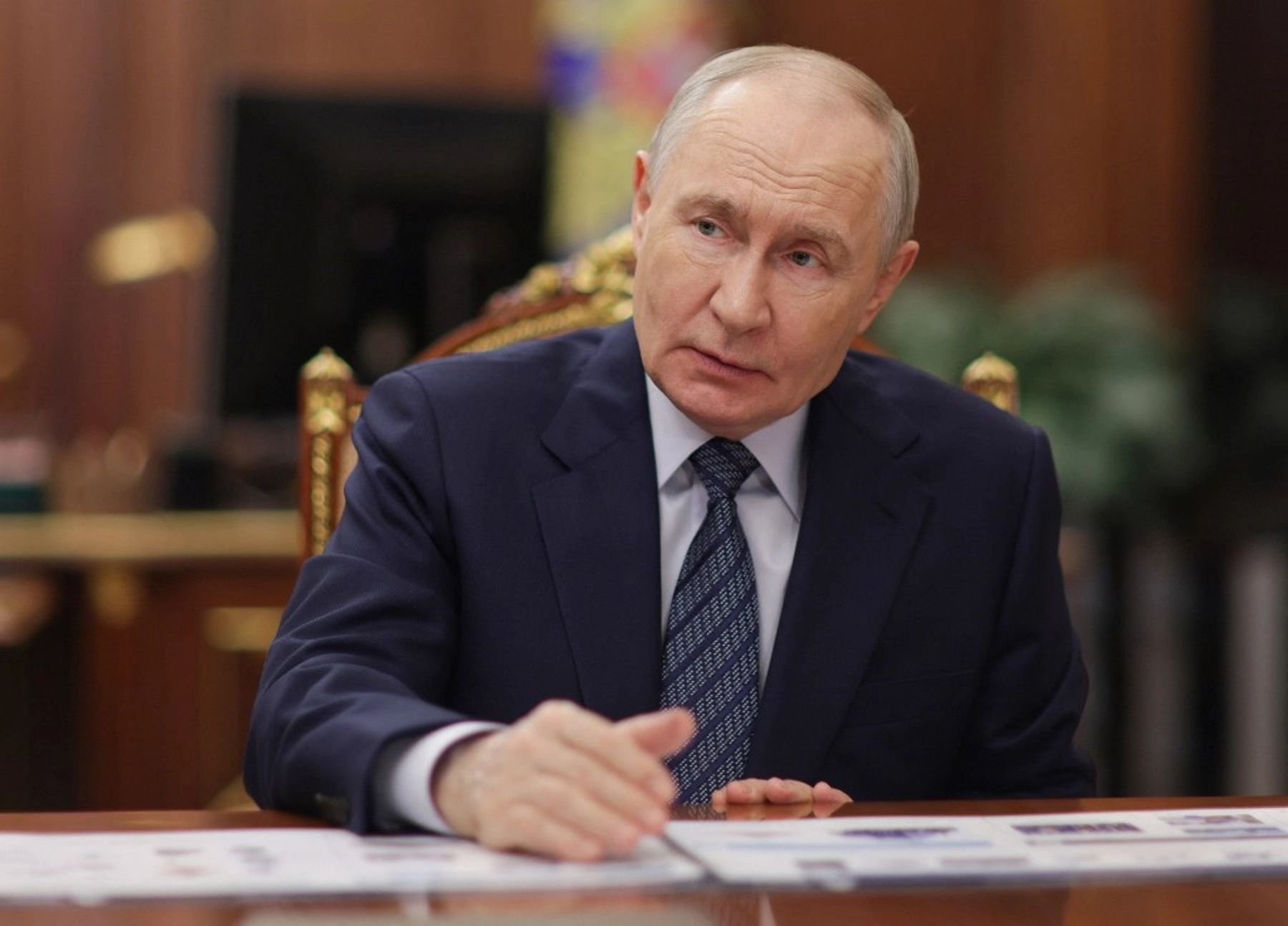 Russian President Vladimir Putin has ordered the Russian military to halt strikes on the Ukrainian capital of Kyiv for a period of three days beginning at midnight on Saturday, Sept. 5, Kremlin spokesman Dmitry Peskov announced.
The order coincides with the arrival of US special envoys Steve Witkoff and Jared Kushner in Moscow on Saturday for diplomatic discussions regarding the war in Ukraine.
The American delegation landed at Moscow’s Vnukovo Airport aboard a business jet, where they were met by Russian special representative Kirill Dmitriev, according to Russian media reports.
Peskov’s statement follows earlier remarks by Kyrylo Budanov, head of the Office of the President of Ukraine, who speculated that Moscow would likely refrain from targeting Kyiv during the American negotiators’ stay in the region.
More Articles...
- Revealed: Microsoft signed $125m contract with Israel during first year of Gaza war
- Blair asked PA to remove 'Palestine' from textbooks, former UK envoy says
- Zelensky Warns International Airlines: ‘Safe Days in Russia’s Skies Are Over’
- Israeli army shoots first and finds reasons to justify mass killings later, veterans group says
Page 3 of 192