Political Glance
 The artist Finneas and three other supporting acts quit Ed Sheeran's tour on Tuesday, after the US rapper Macklemore was removed for his pro-Palestine comments on stage.
Finneas, Irish acts Aaron Rowe and Beoga, and Lukas Graham of Denmark all posted statements announcing they were quitting Sheeran's "Loop Tour" in solidarity with the rapper and Palestinian people.
"Artists must not be silenced when they speak up for the oppressed,” Finneas said in a statement on social media.
His statement came after Irish singer Aaron Rowe published a statement, announcing that he had decided to withdraw as a support act for the British singer.
"Ed has been a friend to me and has changed my life," he said. "But as Irish people we know all too well about genocide, forced famine and violent occupation. I cannot stand by and allow billionaires to use their position of power to silence the rightful voices of those who speak up against Israeli genocide and who highlight the savage murder of children."
All supporting acts quit Ed Sheeran tour in protest of Macklemore’s removal
Pro-Israel billionaire Robert Kraft led campaign to drop Macklemore from Ed Sheeran tour
 In a statement shared on Instagram, US rapper Macklemore confirmed that “Ed Sheeran and his team” had dropped him from the tour after he said “Free Palestine”.
The campaign to remove Macklemore from the tour was driven by billionaire Robert Kraft, owner of the New England Patriots and Gillette Stadium, who threatened to block Sheeran and his team from using his stadium.
Kraft also rallied other stadium owners across the country to stop the tour from proceeding.
“Ed told me that Kraft said I would not be allowed to perform in his stadium,” Macklemore wrote.
“Ed also told me that Kraft had rallied some of the other stadium owners and collectively they gave him an ultimatum: 'If Macklemore stays on the tour, you will not be allowed to play in our venues.'”
Republican launches impeachment effort against Pete Hegseth over Iran war
An anti-war Republican congressman introduced articles of impeachment on Sept. 15 against Pentagon chief Pete Hegseth over the Iran war, potentially causing a political headache for GOP leaders in Congress two months before the midterms.
Kentucky Rep. Thomas Massie, a noted political foe of President Donald Trump, launched the longshot effort to remove Hegseth with a speech on the House floor. He accused Hegseth, a former Fox News host, of betraying his oath of office and abusing his powers as a military leader.
Primarily, he accused Hegseth of violating the Constitution by continuing to oversee military operations in the Iran war without congressional approval.
"This abuse of office frustrated Congress' ability to exercise its most solemn constitutional responsibility," Massie said.https://www.usatoday.com/story/news/politics/2026/09/15/thomas-massie-impeachment-articles-pete-hegseth-iran-war/91776260007/
Under the War Powers Resolution of 1973, Massie argued that the 60- to 90-day legal deadline for the U.S. military to withdraw forces from Iran would've been May 1 – or June 1 at the latest. The Trump administration's rationale for not getting legislative approval for the war has fluctuated as, officials have argued, the waxing and waning of hostilities has altered the timeline of their legal obligations.
French TV censors actress Adele Haenel after she condemns Israel’s genocide in Palestine
 French activist and actress Adele Haenel faced censorship on French television after condemning the Israeli genocide of Palestinians in Gaza.
During an appearance on the French channel France 5, Haenel also accused France of being “complicit” in the genocide and called for sanctions against Israel.
Following her comments, the channel's parent company, France Televisions, removed the programme from its replay service.
On Wednesday, 9 September, Haenel appeared on the programme to discuss her first book, which addresses violence against children and the sexual abuse she suffered as a minor at the hands of director Christophe Ruggia.
A court convicted Ruggia in April of sexually assaulting her, in a case that drew national attention in the country.
Mahmoud Khalil sues Columbia, accusing it of ‘indifference’ to harassment of pro-Palestinian protesters
Mahmoud Khalil, a prominent pro-Palestinian demonstrator targeted by the Trump administration, and other former Columbia University student activists are suing their alma mater over its alleged indifference to harassment they faced there.
The lawsuit filed Monday alleges Columbia violated Title VI of the Civil Rights Act when dealing with incidents against the Palestine Working Group (PWG), an organization the university suspended indefinitely in May 2025.
Khalil, who previously led the student group, was the first in a concerted campaign by the Trump administration to attempt to deport pro-Palestinian foreign students. He was arrested in March 2025 and held in Immigration and Customs Enforcement (ICE) custody for months.
Khalil is still fighting the Trump administration’s deportation efforts and has taken his appeals to the Supreme Court after a circuit court ruled a federal judge did not have the ability to bar the Trump administration from deporting him.
The lawsuit is looking to force Columbia to reinstate PWG, take greater action against anti-Muslin discrimination, allow Khalil back on campus and pay monetary damages.
Supreme Court won't clear way for Trump's mailed ballot rules
 The Supreme Court on Monday, Sept. 14 declined to let the U.S. Postal Service tighten the use of mail-in ballots ahead of the November midterm elections that will decide control of Congress.
The ruling was a loss for President Donald Trump who has challenged the security of mail-in ballots. He’s pushed for greater federal control of elections, which are administered by states − many of which said the changes can't be implemented in time.
The adminisortration had asked the court to suspend a judge's ruling that paused Trump's new role for the Postal Service.
Under the controversial order Trump signed in March, states must give lists of verified voters to the Postal Service and use a specific design for ballot envelopes that includes unique voter barcodes. The Postal Service can refuse to deliver ballots that don't meet the new rules.
Alien Terrorist Removal Court deports legal US resident to Afghanistan in first-ever case
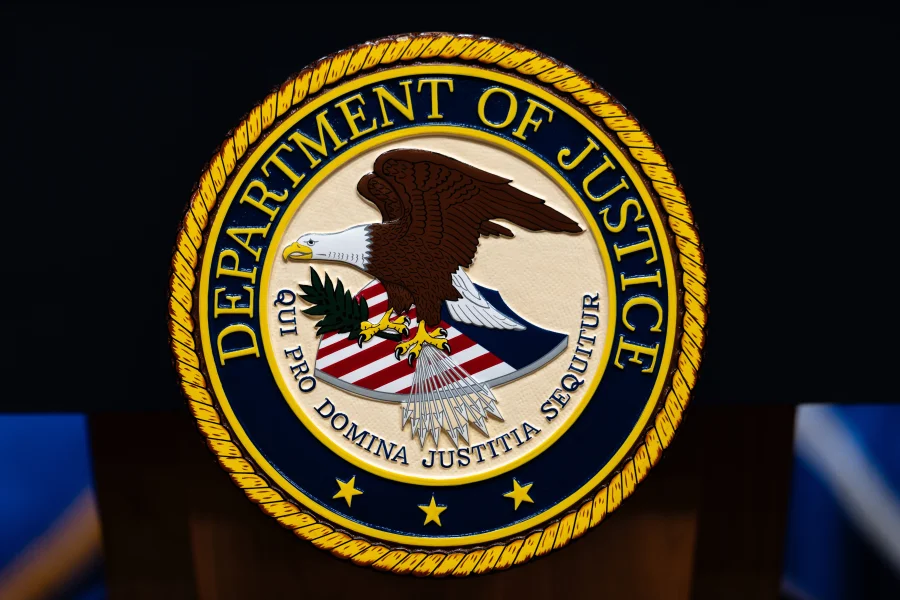 For the first time, the Justice Department brought a case before a decades-old but until now unused special court to deport a legal US resident to Afghanistan after she conceded to being an "alien terrorist," court records show.
Prosecutors alleged Nazira Haji Zada, 47, originally from Afghanistan, supported a plan by her son and son-in-law to commit an Islamic State-inspired mass shooting on Election Day in 2024, according to court documents. Both men have already been charged and will be deported following their release from prison. Haji Zada's son, Abdullah Haji Zada, 19, was sentenced to 15 years in prison.
Prosecutors alleged Nazira Haji Zada, 47, originally from Afghanistan, supported a plan by her son and son-in-law to commit an Islamic State-inspired mass shooting on Election Day in 2024, according to court documents. Both men have already been charged and will be deported following their release from prison. Haji Zada's son, Abdullah Haji Zada, 19, was sentenced to 15 years in prison.
Haji Zada was arrested in July at her home in Fort Worth, Texas, and had an initial hearing in late July. Instead of charging Haji Zada in the criminal justice system, leaders at the Justice Department launched the first-ever civil proceedings at the Alien Terrorist Removal Court. The secretive court allows for a lower standard of proof to remove a person from American soil.
Congress created the court in 1996 to make it easier for the DOJ to use classified evidence, that they say poses a risk to national security, to deport people.
In unsealed court filings dated Aug. 20, Haji Zada waived her rights to challenge the detention and agreed to the deportation. Senior U.S. District Judge Joan Ericksen ordered her removal the same day. Haji Zada's admission will not be used in criminal proceedings, and the documents were released to the public on Friday.
More Articles...
Page 2 of 177