Science Glance
 Humans have wrought such vast and unprecedented changes on the planet that we may be ushering in a new period of geological history.Through pollution, population growth, urbanisation, travel, mining and use of fossil fuels we have altered the planet in ways which will be felt for millions of years, experts believe.
It is feared that the damage mankind has inflicted will lead to the sixth largest mass extinction in Earth’s history with thousands of plants and animals being wiped out. The new epoch, called the Anthropocene – meaning new man – would be the first period of geological time shaped by the action of a single species.
Although the term has been in informal use among scientists for more than a decade, it is now under consideration as an official term.
 A dinosaur bone found in Australia belonged to an ancestor of Tyrannosaurus rex, according to a study that provides the first evidence that the fearsome predator’s predecessors lived in Southern continents.
 At a press conference yesterday, researchers announced the completely unexpected: a Siberian cave has yielded evidence of an entirely unknown human relative that appears to have shared Asia with both modern humans and Neanderthals less than 50,000 years ago.
 Unlike other amphibious creatures that can survive underwater on stored oxygen but must come back up for air, these caterpillars can spend several weeks without ever breaking the surface, according to the paper, which was published online on Monday in Proceedings of the National Academy of Sciences.
 “Evidence .... Show me evidence of CURRENT ‘intelligent life on Mars.’ :) All we see are ruins ... literally thousands of square miles ... of ruins. And, a lot of mud covering them ... slowly eroding and blowing away in the wind. Which is why we can now see glimpses [of] what was once buried in a vast, planetary catastrophe--Which suddenly ENDED the Martian Civilization ... a long, long time ago. RCH - P.S. If there is anyone NOW living on Mars, it is ‘us’ -- as part of the ~60-year-old Secret Space Program."
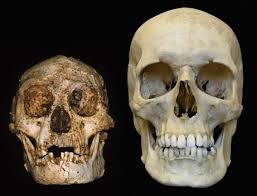 Her scientific name is Homo floresiensis, her nickname is "the hobbit," and the hunt is on to prove that she and the dozen other hobbits since discovered are not a quirk of nature but members of a distinct hominid species.
 Critics of the teaching of evolution in the nation’s classrooms are gaining ground in some states by linking the issue to global warming, arguing that dissenting views on both scientific subjects should be taught in public schools.