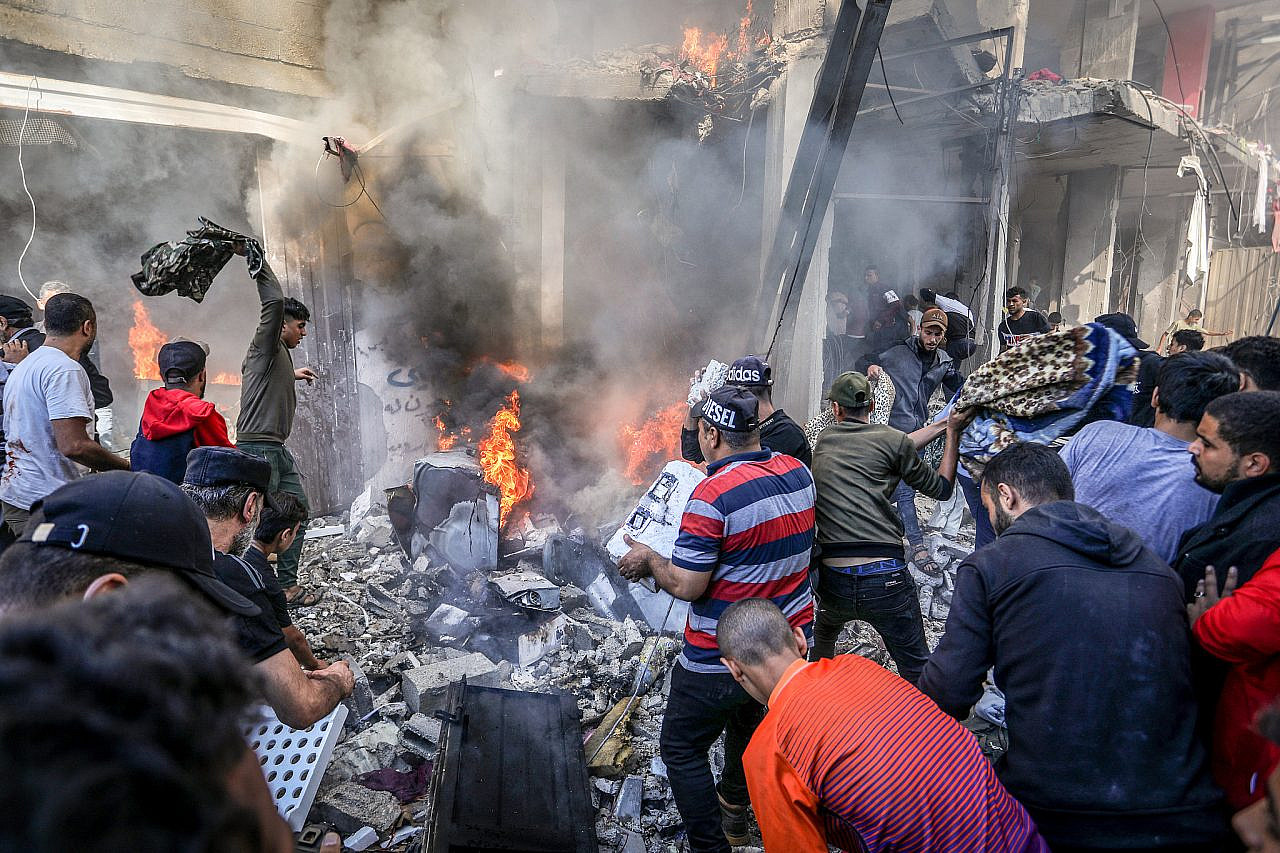
Heavy waves of U.S.-Israeli airstrikes were reported across several Iranian cities, including Tehran, where explosions were heard near Mehrabad Airport, Azadi Square, Tehransar, and Chitgar in the western part of the capital. Additional strikes were reported in Bandar Abbas, Tabriz, Bushehr, and Qazvin, with officials in East Azerbaijan Province reporting dozens of casualties.
Casualty counts: The death toll in Iran has reached at least 1,230, according to the official Foundation of Martyrs and Veterans Affairs.
Iranian Red Crescent: Over 100 civilian sites hit: The Iranian Red Crescent Society said on Thursday it has recorded 1,332 strikes in Iran by the U.S. and Israel since Saturday, with raids documented at 636 locations and at least 174 cities. The Red Crescent said at least 105 civilian sites have been struck, including 14 medical facilities and seven Red Crescent buildings. Iran’s Foreign Ministry spokesperson Esmaeil Baghaei accused the U.S. and Israel of intentionally hitting civilian areas. “Our people are being brutally slaughtered as the aggressors deliberately target civilian areas and any location they believe will inflict the maximum possible suffering and loss of life,” Baghaei said on X.
U.S. and Israeli airstrikes pound Iran for a fifth day
Trump to Meet Arms Makers to Accelerate Weapons Production
US President Donald Trump is meeting top US defense company executives at the White House on Friday as Washington tries to refill stockpiles depleted by strikes on Iran.
Defense conglomerates Lockheed Martin, RTX, and L3Harris were among the companies expected to attend.
The administration is expected to press defense firms to speed up production of missiles and bombs as the Pentagon works to rebuild supplies used in recent operations, including in the Middle East.
The meeting comes at a sensitive time for Ukraine. Reuters reported that Ukrainian F-16 fighter jets ran short of US-made air-to-air missiles for more than three weeks in late 2025, just as Russia was preparing a major winter air campaign. During the gap, Ukrainian pilots had to limit missile use and, in some cases, relied on onboard guns against drones until fresh supplies arrived from partner countries in December.
For Kyiv, the concern is clear: If the US now focuses more heavily on refilling its own arsenal, Ukraine could again face delays in receiving badly needed missiles and air-defense supplies.
Is the UK's intervention in Iran war legal?
The day after the US and Israel launched their war on Iran, and the subsequent Iranian counterattack against US bases in the Gulf, Prime Minister Keir Starmer declared that the UK government would intervene in the conflict in two ways.
First, by intercepting Iranian drones and missiles to protect states not previously involved in the conflict.
And second, by allowing the US to use British bases for “specific and limited" defensive action against Iranian missile sites used to attack Gulf partners.
In his speech on 1 March outlining the government’s position, Starmer explained that the only way to stop the threat from Iranian missiles "is to destroy the missiles at source, in their storage depots or the launchers which are used to fire the missiles”.
He said that the UK would not join the US and Israel in their offensive strikes but would instead focus on “defensive actions”.
Starmer told the UK parliament: “We were not involved in the initial strikes on Iran, and we will not join offensive action now, but in the face of Iran’s barrage of missiles and drones, we will protect our people in the region, and support the collective self-defence of our allies, because that is our duty to the British people.
“It is the best way to eliminate the urgent threat, to prevent the situation spiralling further, and support a return to diplomacy. It is the best way to protect British interests, and British lives. That is what this government is doing.”
Iran’s Deputy Foreign Minister Rejects Trump’s “Big Lie” About Why He Went to War
In an exclusive interview with Drop Site News, Iranian Deputy Foreign Minister Esmail Baghaei rejected President Donald Trump’s claim that he launched the war because Iran was “going to attack first,” calling it a “big lie.”
“There was no intention on the part of Iran to attack the United States,” he said. “They claim that Iran posed an imminent threat to the United States,” Baghaei added. “Did we come to the Gulf of Mexico to target Los Angeles and other U.S. cities? Or did they come 6,500 miles away to Iranian shores?”
On Monday, Secretary of State Marco Rubio told reporters that the U.S. decided to preemptively attack Iran because the White House knew Israel was going to begin bombing Iran and that Iran would strike back. “We knew that that would precipitate an attack against American forces, and we knew that if we didn’t pre-emptively go after them before they launched those attacks, we would suffer higher casualties.”
On Tuesday, Trump sought to recast the U.S. rationale and said that he believed Iran was going to launch an attack first. “They were going to attack if we didn’t do it. They were going to attack first—I felt strongly about that,” Trump said, charging that the Iranians “were getting ready to attack Israel. They were gonna attack others.”
Will Khamenei’s Son Succeed Him? Inside Iran’s Succession Battle as Strikes Continue
“On the US calendar it’s still March 4,” Jabbarli said, “but so much happens in a single day that sometimes it would normally take months or years.”
Ramin Jabbarli is a sociologist and the director of the Seattle-based Foundation for Inclusive Society, an NGO that regularly monitors the human rights situation in Iran. He told Kyiv Post that since airstrikes began last Saturday, it has not only been the internet – but even phone lines have been cut off.
“It’s not only about protests,” Jabbarli said. “They don’t want information to spread quickly… They want to limit communications.”
Monitoring group NetBlocks reported Iran’s connectivity falling to around 1% of ordinary levels during the blackout. Jabbarli said some footage escapes via satellite links like Starlink or through devices brought out of the country, but described those routes as limited and risky.
The most urgent political question, Jabbarli said, is what comes after Khamenei – and whether the succession stabilizes the system or becomes another trigger for conflict.
“There are different alternatives being discussed,” he said. “One is Khamenei’s son. Another is [Iran’s first supreme leader Ruhollah] Khomeini’s grandson. Hassan Rouhani is also mentioned.”
Israel warns residents in dozens of Lebanese border villages to evacuate as strikes intensify
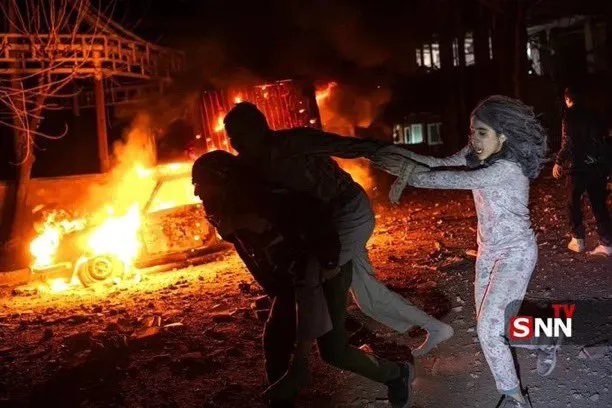
Israel’s military issued warnings to residents of dozens of border villages in southern Lebanon to evacuate “immediately” Wednesday as airstrikes on suburbs of Beirut intensified and Hezbollah claimed more attacks.
Lebanon was dragged into the broader war in the Middle East early Monday when Hezbollah fired rockets and drones into northern Israel, triggering Israeli retaliatory airstrikes that killed more than 70 people, wounded more than 400 and displaced tens of thousands of people from southern Lebanon, the eastern Bekaa Valley and Beirut’s southern suburbs.
The ongoing conflict is not the first between Hezbollah and Israel. Hezbollah began firing into Israel a day after the Oct. 7, 2023, Hamas-led attack on southern Israel triggered the war in Gaza. After months of low-level fighting, a full-scale war erupted in September 2024 and Israel later launched a ground invasion of Lebanon.
U.S. Sinks Iranian Warship As Bombardment Of Iran Intensifies
The U.S. sank an Iranian warship in international waters, Defense Secretary Pete Hegseth said Wednesday, as it intensified its bombardment with Israel of Iran’s security forces and other symbols of power. Tehran vowed to completely destroy the Middle East’s military and economic infrastructure — signaling the war was nowhere near over and could expand further.
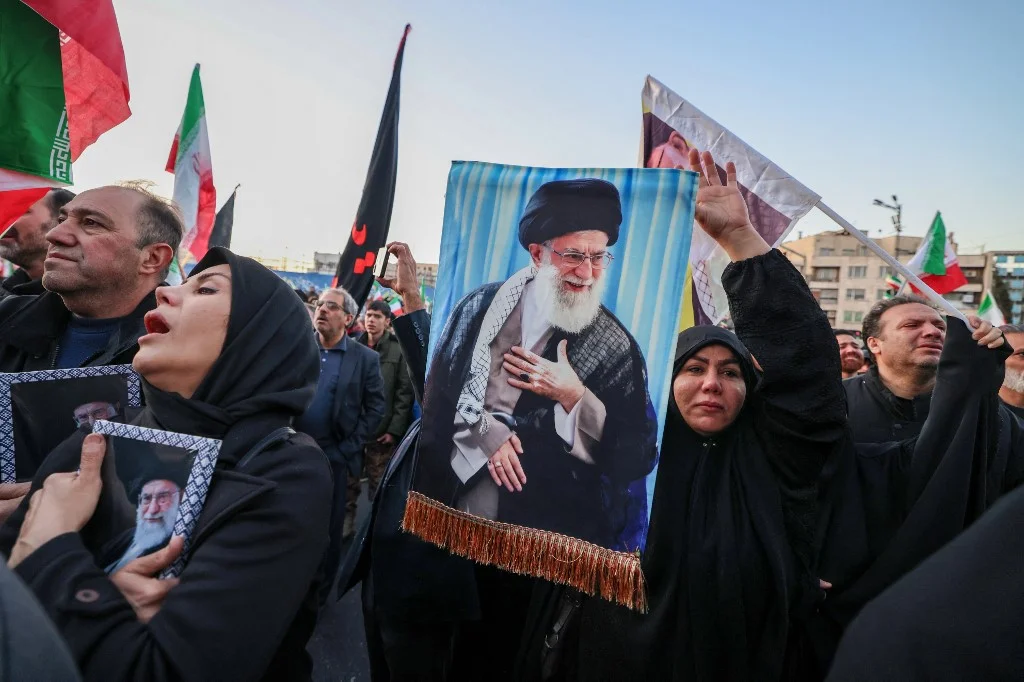
The tempo of the strikes on Iran was so intense that state television announced the mourning ceremony for Iranian Supreme Leader Ayatollah Ali Khamenei, who was killed in the conflict, would be postponed. Millions attended the funeral of his predecessor Ayatollah Ruhollah Khomeini in 1989.
In addition to striking Tehran on the fifth day of the conflict, Israel hit the Iranian-backed Hezbollah militant group in Lebanon, while Iran fired on Bahrain, Kuwait and Israel. As the conflict spiraled, Turkey said NATO defenses intercepted a ballistic missile launched from Iran before it entered Turkey’s airspace.
The war has killed more than 1,000 people in Iran and dozens in Lebanon, while disrupting the supply of the world’s oil and gas, snarling international shipping, and stranding hundreds of thousands of travelers in the Middle East.
More Articles...
- Witnesses Describe Horror Scene After “Double-Tap” Bombing Kills Over 20 at Popular Tehran Square
- Kenneth Roth: Trump and Netanyahu’s attack on Iran is an illegal act of aggression
- Lawmakers: Israeli plan to attack Iran dictated Trump’s decision on strikes
- Live: Trump says US-Israeli war on Iran may last ‘four weeks’ as oil prices surge
Page 5 of 120
War Glance