While Donald Trump ponders demolishing the Kennedy Center unless his name is added to the memorial for the slain president, the United States Institute of Peace filed an emergency motion in federal court on Thursday asking a judge to block his administration “from carrying out plans to carve President Trump’s name into the façade of the iconic USIP headquarters building.”
The filing was made in a court battle that began in May 2025, when a federal judge ruled that Elon Musk’s so-called “department of government efficiency”, or US Doge service, illegally took over the the non-profit thinktank created and funded by the US Congress through “blunt force, backed up by law enforcement officers from three separate local and federal agencies”.
Musk’s Doge staff fired most USIP employees in a late-night email in March 2025, and then forcefully entered the thinktank’s building after cancelling its contract for private security.
In court, the USIP has maintained the organization is an independent creation of Congress and outside the president’s executive authority. The administration argues it is an executive branch organization, and pushed ahead, last December, with affixing Trump’s name to the exterior of the building, using bolted-on lettering. That change already offended the USIP board members who filed the suit, but carving Trump’s name into the stone, they argued on Thursday, “would cause irreparable harm”.
More...





 If recent history is the judge, President Donald Trump faces an uncertain legal landscape after his latest attempt to ban certain media outlets from covering him at the White House.
 When Israel deployed its Iron Beam laser weapon for the first time last December, the announcement by leading Israeli defense firms Rafael and Elbit Systems was met with fawning coverage worldwide. The futuristic laser system, designed to shoot drones and rockets out of the sky, was celebrated as a demonstration of the Israeli weapons industry’s technological sophistication.
 The United Nations has “reasonable grounds” to believe the US committed a war crime with its strikes on the Minab elementary school and a sports centre in the opening days of the US-Israeli war on Iran.
 Dozens of far-right Israelis gathered outside NAZA filmmaker Rachel Szor's family home on Wednesday, demanding she be hanged over her documentary on war crimes Israel committed during its genocidal war on Gaza.
 More than 1,600 critically imperiled species protected under the US Endangered Species Act (ESA) face losing further federal protections following a new reinterpretation of the 1973 law by the Donald Trump administration.
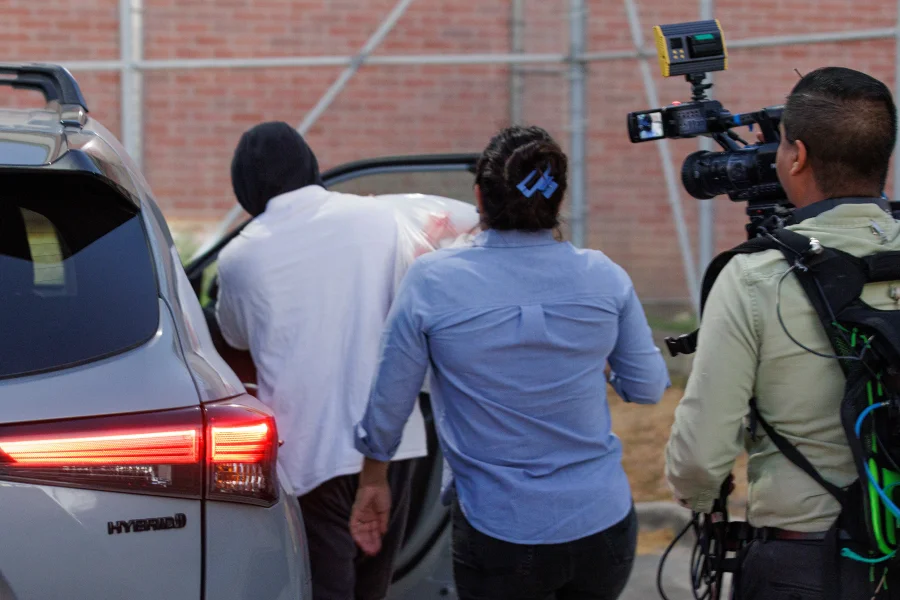 Immigration and Customs Enforcement officer Christian Castro made his first appearance in state court in Minneapolis today in connection with the shooting of a Venezuelan man last January during a surge that brought thousands of federal agents to the Twin Cities area.