War Glance
 U.S. troops say companies that recruit military translators are sending linguists to southern Afghanistan who are unprepared to serve in combat, even as hundreds more are needed to support the growing number of troops.
Some translators are in their 60s and 70s and in poor physical condition - and some don't even speak the right language.
Many translators unfit in any language
IDF soldier: Gazans used as human shields to check militants' homes
 The Israel Defense Forces used Palestinians as human shields during Operation Cast Lead last January despite a 2005 High Court ruling outlawing the practice, a Golani brigade soldier says. He says he did not see Palestinians being used as human shields but was told by his commanders that this occurred.
The soldier says his unit employed a variation of the practice, the so-called "neighbor procedure," when it checked homes for Palestinian militants.
Israeli soldiers reveal the brutal truth of Gaza attack
 The picture that emerges from the testimonies, which have been seen by The Independent, is one of massive fire power to cover advances and rules of engagement that were calculated to ensure, in the words attributed to one battalion commander, that "not a hair will fall of a soldier of mine. I am not willing to allow a soldier of mine to risk himself by hesitating. If you are not sure, shoot."
U.S. Said to Have Averted Inquiry Into ’01 Afghan Killings
 After a mass killing of hundreds, perhaps thousands, of Taliban prisoners of war by the forces of an American-backed warlord during the 2001 invasion of Afghanistan, Bush administration officials repeatedly discouraged efforts to investigate the episode, according to government officials and human rights organizations.
TVNL Comment: How manymore crimes must be unearthed before the Bush criminals are held accountable? Just asking...
Drones 'kill dozens' in Pakistan
 Up to 50 suspected militants have been killed in two US attacks in north-west Pakistan, local officials told the BBC.
In the first attack, suspected US drones attacked a Taliban forest camp in South Waziristan, near the Afghan border, killing at least 10 militants.
TVNL Comment: What the hell is a 'suspected militant'? Just asking....
Adding Up the True Costs of Two Wars
 But not so fast. The conflict that began in 2003 is far from over for us, and the next chapter - confronting a Taliban that reasserted itself in Afghanistan while the U.S. was sidetracked in Iraq - will be expensive and bloody. The death toll for U.S. troops in Iraq and Afghanistan reached 5,000 in June. An additional 80,000 Americans have been wounded or injured since the war in Iraq began.
6 U.S. soldiers killed in Afghanistan
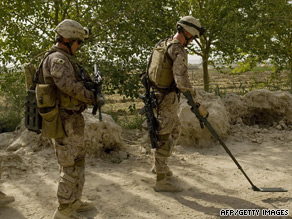 Six U.S. soldiers were killed Monday in two roadside bombings in Afghanistan.
Four were killed in an attack in the northern Afghanistan province of Kunduz, the U.S. military said. The Taliban claimed responsibility for the attack, saying it struck a military vehicle, killing five "foreign" soldiers and wounding two others. Two other U.S. soldiers were killed in an improvised explosive device attack in southern Afghanistan.
More Articles...
Page 86 of 123