Science Glance
 We've discovered evidence of just about every gas imaginable out in space, but one we'd never seen was molecular oxygen, the stuff we breathe everyday. Now, thanks to powerful infrared telescopes, we've found the very first traces of space oxygen.
While individual oxygen atoms are found throughout space, that's not what we breathe. Instead, we inhale O2, which is a molecule composed of two oxygen atoms bonded together. This particular gas is very common on Earth - it accounts for about 20% of the air around us - but we had never found molecular oxygen in space... until now.
Oxygen molecules discovered in space for the very first time
Is an asteroid stalking Earth?
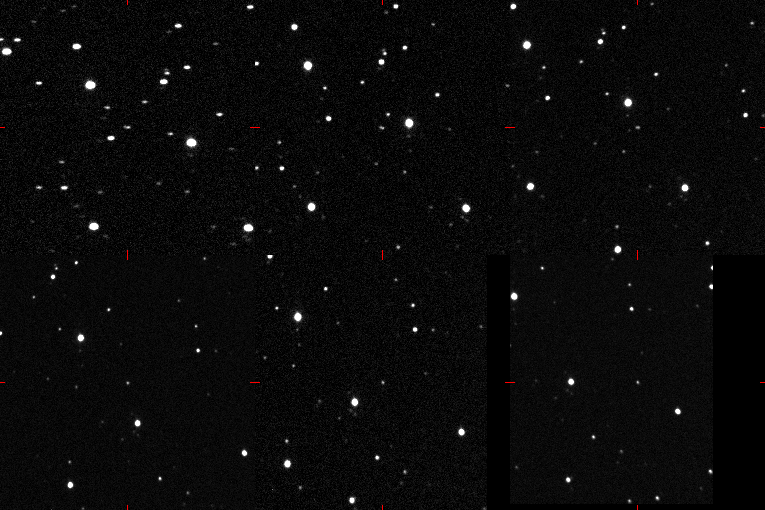 Scientists have known for many years that asteroids often follow planets, moving in the same orbit around the sun. These so-called "Trojan asteroids" have been spotted tagging alongside Jupiter, Mars, and Neptune.
Earth, however, was believed to be free of these celestial stalkers — until now. Astronomers from Athabasca University in Canada, using data from an infrared NASA telescope that's orbiting the Earth, discovered an asteroid tracking us from just 50 million miles away.
Scientists spot Pluto's fourth moon
 Astronomers looking for rings around Pluto have instead made an unexpected find: a fourth moon circling the dwarf planet.
The object, temporarily designated P4, is probably the most dwarvish of Pluto's moons: It's estimated to be just 8 to 21 miles (13 to 34 kilometers) in diameter. In comparison, Pluto's diameter is about 1,400 miles, and its other three moons range in diameter from 648 miles (for Charon) to between 20 and 70 miles (for Nix and Hydra, discovered in 2005). The newfound moon orbits in a region between Nix and Hydra, and makes a complete circuit roughly every 31 Earth days.
Science and religion: God didn't make man; man made gods
 Before John Lennon imagined "living life in peace," he conjured "no heaven … / no hell below us …/ and no religion too."
No religion: What was Lennon summoning? For starters, a world without "divine" messengers, like Osama bin Laden, sparking violence. A world where mistakes, like the avoidable loss of life in Hurricane Katrina, would be rectified rather than chalked up to "God's will." Where politicians no longer compete to prove who believes more strongly in the irrational and untenable. Where critical thinking is an ideal. In short, a world that makes sense.
Image of ancient mammoth or mastodon found on bone
 Some of the earliest Americans turn out to have been artists. A bone fragment at least 13,000 years old, with the carved image of a mammoth or mastodon, has been discovered in Florida, a new study reports.
While prehistoric art depicting animals with trunks has been found in Europe, this may be the first in the Western Hemisphere, researchers report Wednesday in the Journal of Archaeological Science.
Spitzer telescope snaps stunning image of 'ring' nebula
 The Spitzer space telescope has snapped a striking false-colour image of the RCW 120 nebula, a vast cloud of gas and dust where stars have recently formed.
RCW 120 lies about 4,300 light-years away in the constellation Scorpius, just above the plane of the galaxy. It emits a broad range of colours in the infrared region, with wavelengths far beyond those we can see.
2 new elements officially added to periodic table
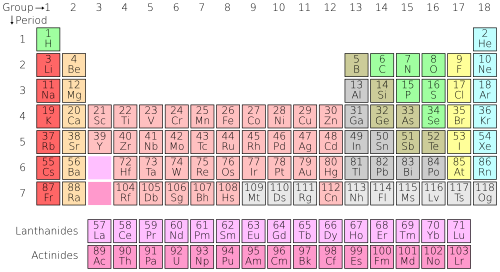 Remember the periodic table from high school chemistry? It just got a little bigger. Two new chemical elements, numbers 114 and 116, have been officially recognized by an international committee of chemists and physicists.
The elements last for less than a second and join such familiar neighbors as carbon, gold, tin and zinc. The new ones don't have approved names yet. That brings the total of known elements to just 114 because elements 113 and 115 haven't been officially accepted yet, said Paul Karol of Carnegie Mellon University.
More Articles...
Page 41 of 63